Concrete Uses and Risks of ChatGPT in the Medical Field
Discover the concrete uses of ChatGPT in healthcare, from assistive tools for practitioners to potential pitfalls for patients. Precautions, advice, and prompt examples.
The use cases for generative artificial intelligence are multiplying with the rapid evolution of large language models (LLMs), which are becoming increasingly powerful and versatile. These models are no longer just for generating text: they perform various tasks, solve problems, and interact in a personalized way.
Whether for personal use, often as new search engines, or professional use, to automate simple tasks, LLMs attract more users every day.
Our research and discussions with healthcare professionals confirm that the medical field is no exception to this trend. Both patients and practitioners are adopting AI at a sustained pace.
For Patients: Real Risks Not to Be Underestimated
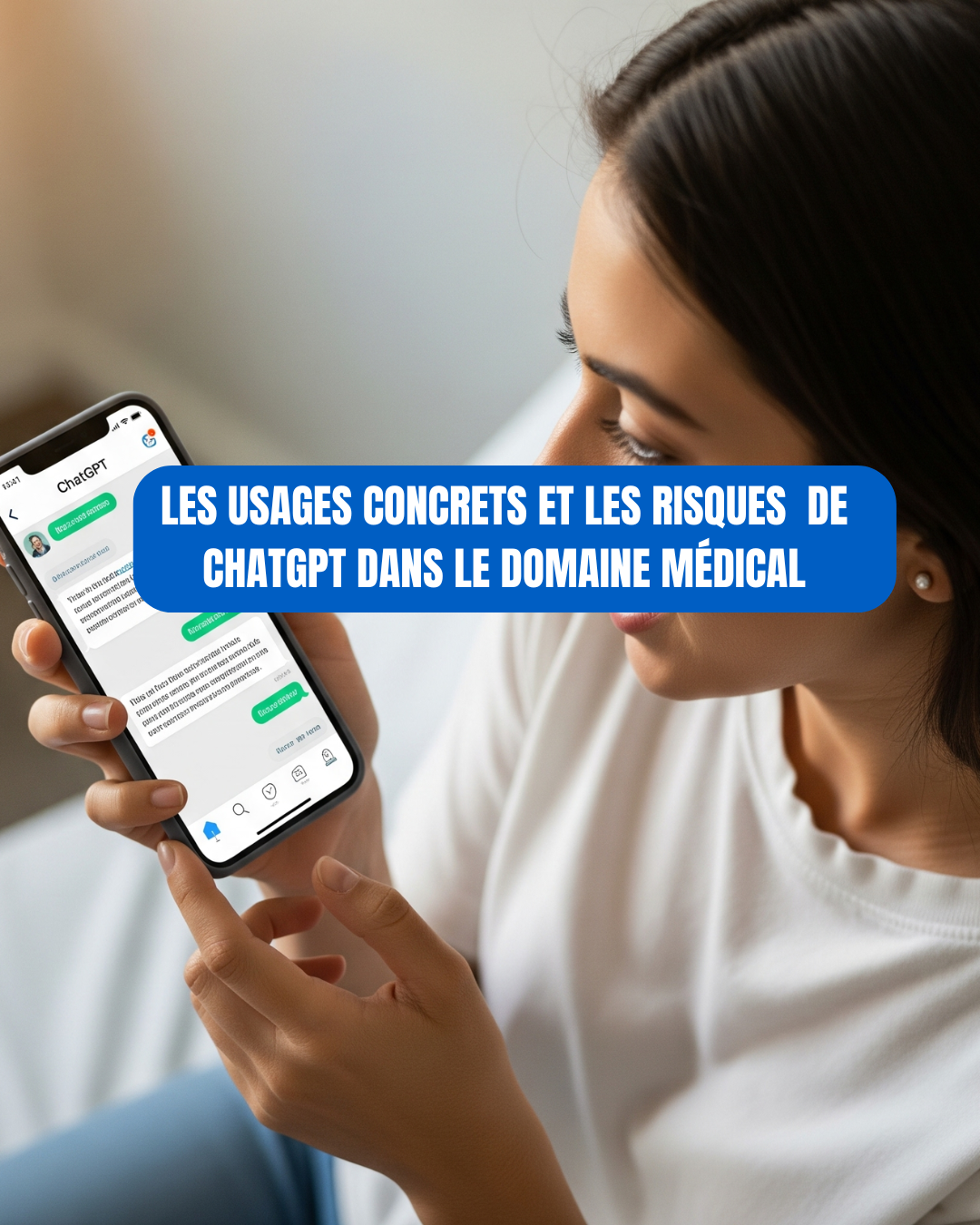
Many patients now consult ChatGPT or other conversational AIs even before seeing a doctor. They describe their symptoms and hope to get a diagnosis or medical advice.
For now, and fortunately, these models include safeguards and systematically recommend consulting a healthcare professional. However, a persistent patient can bypass these warnings and receive inaccurate, or even dangerous, answers. This can lead to:
Minimizing a serious health problem,
Dramatizing a benign symptom,
Modifying or delaying appropriate medical care.
Furthermore, to get personalized answers, patients sometimes share sensitive information (age, symptoms, medical history, etc.). However, this data can be used to train the models and is not protected by GDPR if entered on public, non-medically certified platforms.
For Practitioners: Promising but Underutilized Potential
While the adoption of these tools among healthcare providers is still in the minority, some professionals are keenly interested in them or even actively using them.
For some, AI is just a gadget. For others, when well-mastered, it becomes a true digital assistant. Here are some concrete uses identified among professionals:
Quickly research scientific data (thanks to Perplexity or ChatGPT with web browsing enabled),
Correct and rephrase medical texts,
Structure notes or a patient assessment from keywords,
Create educational materials or alternatives to rehabilitation exercises,
Record and organize ideas on the fly, like an intelligent dictaphone.
These uses facilitate daily practice, especially for young professionals or healthcare providers in private practice.
Tips for Using ChatGPT Effectively
Here are some best practices to optimize ChatGPT's responses while maintaining responsible use:
Give clear and firm instructions, as you would to a colleague: avoid vague phrases like "can you help me with..." and prefer direct instructions.
Use the phrase "What if..." to simulate medical scenarios or explore alternative therapies.
Instruct the model to rely only on verifiable facts.
Ask it to challenge you or question your hypotheses, citing reliable sources.
Specify the expected format: for tasks like structuring an assessment or a clinical note, you can let ChatGPT choose a format. But if you want a specific output, it is essential to provide it with a clear example of the expected format, including typical examples in your prompt. This will guide its response more reliably.
Never provide personal or identifiable medical information about your patients (name, surname, exact medical history, etc.).
Example prompt to use
💡 Prompt to structure a consultation summary from raw notes:
“Adopt the stance of an expert in the relevant field. Respond only based on verifiable facts, citing reliable sources where relevant (scientific reports, official recommendations, meta-analyses, etc.).
I want to explore a complex topic in a professional setting.
What if we considered different hypotheses or alternative approaches, which options are supported by solid evidence?
Challenge my ideas: identify possible biases, question implicit assumptions, and suggest avenues I might not have considered.
Warning: never use personal or sensitive data. The goal is to remain within an ethical, responsible, and strictly fact-based framework.”
🛑 Remember: never use real patient data in your prompts. Use fictitious or anonymized data to comply with GDPR.
The Dangers of Generative AI in Healthcare
Generative artificial intelligence currently poses a major data security problem. Models like ChatGPT sometimes temporarily store user inputs to improve their performance. Therefore, it is essential to avoid providing sensitive information at all costs, even if the platform seems secure.
Key takeaways:
It is not legal to transmit your patients' health data to a tool not approved by DMP/Health Data Hub.
Many professionals are still unaware, but these practices are outside the regulatory framework.
No 100% secure solution currently exists for using these tools in a clinical setting without risks.
Towards a Responsible Solution: Co-creation with Healthcare Professionals
Facing these challenges, we are currently working on the co-creation of an AI tool specifically designed for healthcare professionals, with an ethical, secure, and GDPR-compliant framework.
🎯 Objective: to offer a robust, ethical, and useful solution, developed WITH users to meet their real needs without compromising data security.
👉 If you are interested in this project, you can join our Early Adopter program and actively contribute to this collaborative approach.
Conclusion
Generative artificial intelligence, and ChatGPT in particular, opens up fascinating new perspectives in the world of healthcare. While current uses are still in their infancy, they already show considerable potential for both patients and professionals.
But this opportunity comes with its share of responsibilities. It is essential to understand the risks, respect the legal framework, and use these tools with rigor and prudence.
With a collaborative and ethical approach, AI could well become a major ally in the evolution of medical practices.