Medical Transcription: Nabla, Heidi, Doctolib, Tandem, Praxy… comparison of the best solutions
2025 comparison of the best AI medical transcription solutions: Nabla, Doctolib, Heidi, Tandem, Praxy. Save time and improve your clinical notes.
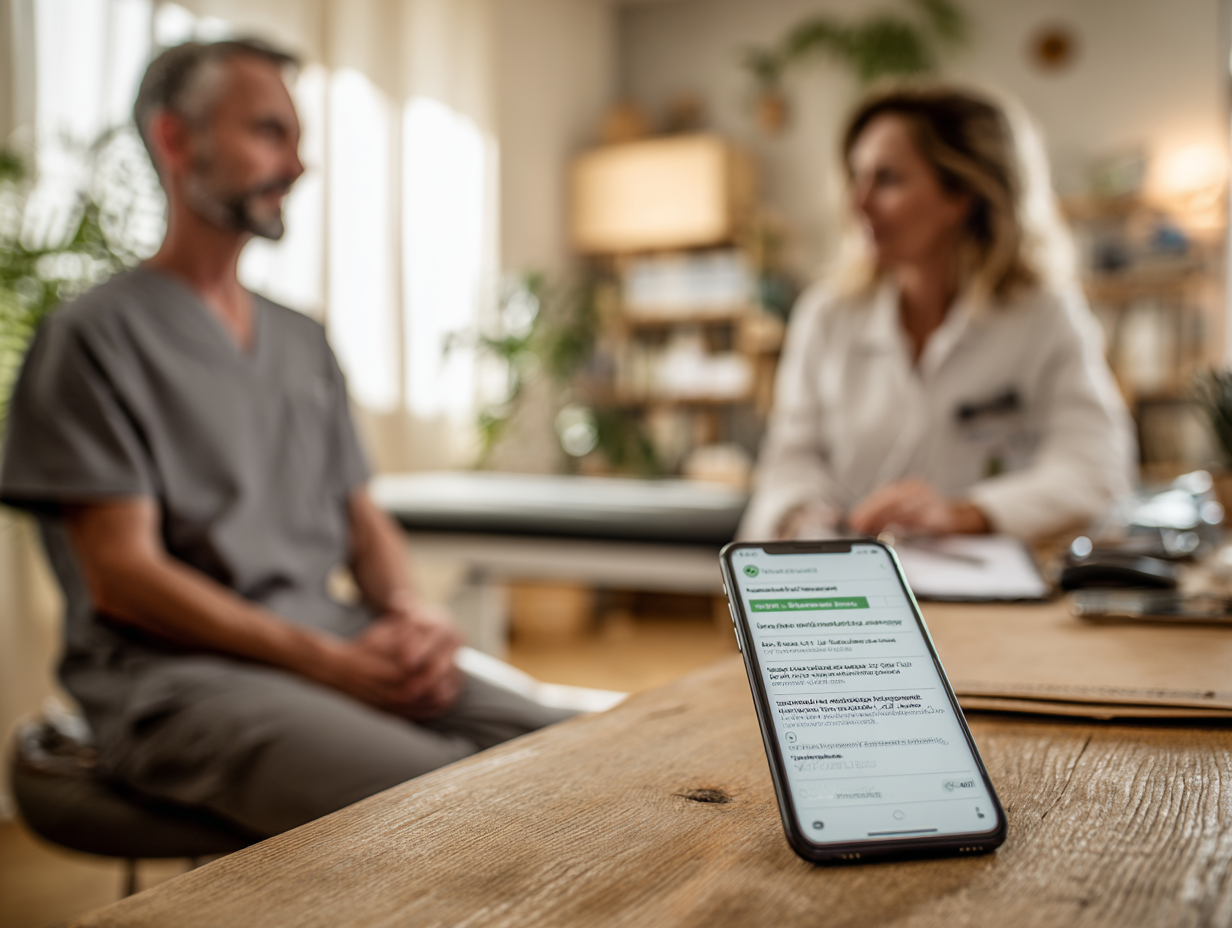
AI-powered medical transcription has become an indispensable strategic tool for healthcare professionals in just a few years. Faced with an explosion of administrative burden, pressure on medical time, and regulatory requirements, AI medical transcription solutions are no longer limited to simple note-taking: they are becoming true intelligent clinical assistants.
In 2025, players like Nabla, Doctolib Assistant, Tandem Health, and Praxy Santé are structuring the market. New approaches are also emerging, such as Markus Santé, which pushes usage far beyond transcription with advanced clinical data exploitation.
This comprehensive comparison helps you understand, compare, and choose the solution best suited to your practice.
What is AI Medical Transcription?
AI medical transcription involves automatically transforming a doctor-patient conversation into structured medical documentation. Unlike classic voice dictation, AI analyzes the clinical context, identifies relevant information, and organizes it according to standard medical formats.
Difference between voice dictation and intelligent transcription
Voice dictation: the doctor speaks, the text is transcribed word for word.
AI medical transcription: the conversation is understood, synthesized, and structured automatically.
This evolution marks a major change: we are moving from a data entry tool to a medical practice support tool.
How intelligent medical transcription solutions work
Audio capture and patient consent
The consultation is recorded in real time (in-person, teleconsultation, or phone), with explicit patient consent.
Analysis, transcription, and structuring
The AI:
transcribes the conversation,
identifies symptoms, history, diagnoses, treatments,
structures the clinical note (SOAP, report, letter, etc.).
Validation and integration into the patient record
The healthcare professional validates the note before integrating it into the electronic patient record (EPR).
Serious solutions do not record raw audio and comply with GDPR and HDS standards.
Concrete benefits for healthcare professionals
1 to 2 hours saved per day
Significant reduction in burnout
More complete and better structured patient records
Improved consultation quality (less screen time, more listening)
Standardization and traceability of clinical information
2025 comparison of the best AI medical transcription solutions
Nabla: the premium multi-specialty solution
Positioning
Nabla positions itself as a complete medical assistant oriented towards organized structures and specialists.
Key features
Fast and accurate transcription
Support for many specialties
Intelligent structuring of clinical notes
Automated medical coding
Integration with many EPRs
Advantages
High level of accuracy
Robust and proven solution
Significant time savings
Limitations
High cost
Limited integration with some French software
Not very flexible outside large ecosystems
Ideal for
Hospitals, clinics, multi-practitioner specialized practices.
Heidi: the international AI medical scribe for clinics and hospitals
Positioning
Heidi is a global AI-powered medical scribe solution designed to assist healthcare professionals with daily clinical documentation. Heidi was developed by an Australian company founded in 2019 and is used in many countries to automate transcription and clinical note generation.
Key features
Automatic transcription of consultations, even in multi-speaker or noisy environments
Generation of structured notes, letters, and medical documents
Multilingual support and customization of note templates
Possible integration with electronic health records (EHR/EPR)
Intelligent task management (codes, follow-ups, clinical summaries)
Advantages
Solution suitable for all clinical specialties, from general practitioners to specialists
Real-time transcription
Tool designed to significantly reduce administrative time and improve patient experience
Compliant with international standards for data security and confidentiality
Examples of use in different languages and clinical contexts
Limitations
May require an adaptation period for users
EHR integration may vary depending on the IT environment
Ideal for
Practitioners, clinics, hospital departments seeking a robust AI solution for medical documentation, with international coverage.
Doctolib Assistant: perfect integration for Doctolib users
Positioning
Solution designed exclusively for the Doctolib ecosystem.
Key features
Automatic note-taking
Consultation summary
Pathology coding
Letter generation (depending on version)
Integrated medical dictation
Advantages
Native and fluid integration
Ease of use
Clear pricing
Limitations
Only usable with Doctolib
Still limited specialty coverage
Little advanced customization
Ideal for
General practitioners and specialists already using Doctolib.
Tandem Health: the rigorous and European clinical approach
Positioning
Tandem Health aims for widespread adoption in healthcare facilities with high clinical demands.
Key features
Real-time conversational transcription
Customizable clinical templates
Generation of medical letters
Automatic coding
Integration with most EPRs
Advantages
Very clinical vision
Strong integration capability
Adapted to complex structures
Limitations
Less oriented towards solo practices
Ideal for
Health centers, hospitals, multi-site organizations.
Praxy Santé: the accessible and multichannel French solution
Positioning
Praxy Santé stands out for its quality/price ratio.
Key features
Real-time transcription
In-person consultation, teleconsultation, and phone
Automatic generation of medical documents
Mon Espace Santé compatibility
Telephony and video integration
Advantages
Designed for French standards
Unique multichannel on the market
Limitations
Less known internationally
More restricted ecosystem
Ideal for
Private practices, health centers, versatile practitioners.
Markus Santé, much more than medical transcription
Markus Live: from transcription to augmented clinical intelligence
Markus Santé adopts a radically different approach with the launch of Markus Live.
Here, medical transcription is no longer an end in itself, but exploitable clinical raw material.
Advanced customization of medical documents
Thanks to direct access to the complete transcription, Markus Live allows:
to model reports according to specialty,
to adapt documents to the practitioner's style,
to automatically generate personalized clinical documents.
Intelligent and contextualized medical research
Markus goes further by exploiting transcription to:
conduct targeted research in scientific literature,
propose care plans adapted to the patient's specific context,
suggest clinical recommendations based on scientific data.
Patient communication and continuity of care
Markus Live also allows:
to send understandable summaries to the patient,
to share explanatory documents post-consultation,
to improve therapeutic adherence and follow-up.
Key positioning: Markus Live transforms AI into a post-consultation clinical assistant, where most solutions stop at documentation.
Security, GDPR, and compliance
All serious solutions comply with:
explicit patient consent,
secure hosting of health data,
no retention of audio recordings,
GDPR and HDS requirements.
From transcription to agentic AI
Medical transcription is evolving towards AI capable of acting:
propose clinical decisions,
automate post-consultation actions,
accompany the doctor throughout the care pathway.
Players like Markus already illustrate this transition towards the augmented, not replaced, physician.
Conclusion
In 2025, AI medical transcription is no longer a luxury but an operational necessity.
The right choice depends on your practice, your software environment, and your vision of care.
The true value is not just the time saved, but the regained clinical quality.