Patient consent and AI: recording a consultation
Patient consent to AI in a consultation: informing is mandatory, agreement is to be obtained if the AI records the voice. CNIL, HAS, sample script.
In short. On patient consent in a consultation with AI under French law, two things must be kept apart: informing the patient is mandatory, and consent is in principle not the legal basis for processing their health data. But if the tool records their voice, their agreement is to be obtained: that is the reading of the February 2026 draft HAS-CNIL guide, and the Criminal Code punishes recording private words without consent, which is presumed where the act is done with the person's knowledge and they do not object although able to.
For a self-employed clinician, the safest practice to record a session with AI is three steps: inform before the session, get the patient's agreement, note it in the record. A consent script to say aloud is further down.
This article covers France only. It is general information, not legal advice. It separates what is mandatory, what is recommended and what is not settled. The HAS-CNIL guide quoted below is, at the time of writing, a draft: we found no final version.
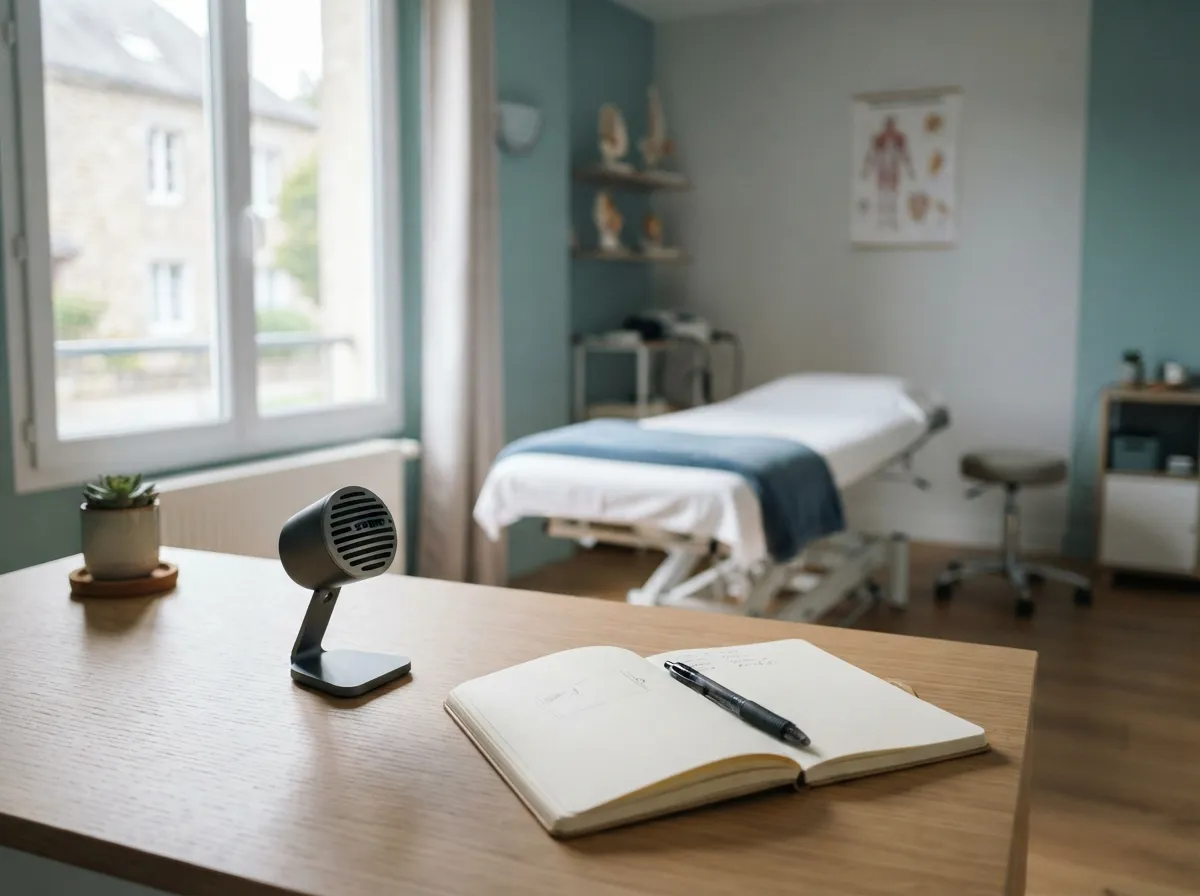
Do you need the patient's consent to record a session with AI?
It depends on what the tool does. Two questions must be kept apart:
- Processing health data (transcribing, structuring, drafting the report). The CNIL states that clinicians do not need the patient's consent to collect and keep their care data, and the draft HAS-CNIL guide indicates that consent is not the legal basis for processing by an AI system in a care setting. Informing the patient, however, is mandatory.
- Capturing the patient's voice. The draft HAS-CNIL guide recalls that collecting and using voice recordings that identify a person requires their consent, under the Civil Code. Article 226-1 of the Criminal Code punishes recording words spoken in private or confidence without the speaker's consent.
| Point | Status | Source |
|---|---|---|
| Inform the patient about the processing of their data (purpose, recipients, retention, rights) | Mandatory | GDPR art. 13; CNIL page for self-employed health professionals |
| Inform the patient about the hosting of their health data, unless they object for a legitimate reason | Mandatory | Public Health Code, art. L. 1111-8 |
| Respect the patient's right to object | Mandatory | GDPR art. 21 (recalled in the HAS-CNIL guide) |
| Do not record private words without consent (presumed where the act is done with the person's knowledge and they do not object although able to) | Mandatory (criminal law) | Criminal Code, art. 226-1 |
| Obtain the patient's agreement when the tool records their voice | Recalled by the draft HAS-CNIL guide, under the Civil Code | HAS-CNIL guide, recommendation 7.1 (draft of 16/02/2026) |
| Record the information given in the patient file | Good practice | HAS-CNIL guide, recommendation 7.1 |
| Add a sentence on AI use to the report given to the patient | Good practice | HAS-CNIL guide, recommendation 7.2 |
| Form of the agreement (verbal, ticked box, signed) | Not settled by any text; for the "ethical consent", the guide accepts verbal or a ticked box | HAS-CNIL guide, recommendation 7.1 |
Why do answers on this topic contradict each other?
Because two questions get mixed up. For processing data, informing the patient is in principle enough; for the voice, their agreement is to be obtained. Remember the split: the legal basis of the processing is not consent, but recording the patient's voice calls for their agreement.
What information must the patient receive in any case?
The data controller is you, the self-employed clinician: you must inform the patient about the processing of their data. GDPR article 13 lists the items: identity of the controller, purposes, recipients, retention period, and rights of access, rectification, erasure and objection. The CNIL states that a waiting-room poster can carry this information, and that you do not need the patient's consent to collect and keep their care data.
Hosting adds a rule: article L. 1111-8 of the Public Health Code requires that hosting of health data takes place after the person has been duly informed, unless they object for a legitimate reason, with a host holding a conformity certificate (HDS in France) and under a contract. For physiotherapists, the code of ethics (article R. 4321-83) asks for "loyal, clear and appropriate" information on the patient's condition and proposed care. Applying it to an AI tool is a reasonable reading, but we found no position from the professional body on this.
What does the Criminal Code say about recording a session?
Article 226-1 of the Criminal Code punishes with one year of imprisonment and a fine of 45,000 euros deliberately invading another person's privacy, in particular by capturing or recording, without the speaker's consent, words spoken in private or confidence (version in force following the law of 21 March 2024, read on 20 November 2026). Two points matter:
- where the act is done with the knowledge of the person, who does not object although able to, their consent is presumed;
- for a minor, consent must come from the holders of parental authority.
What the text does not say: whether it applies as such to a recording made by a clinician to draft a report, with the aim of providing care. We found no decision or official position on this precise case. When in doubt, informing before recording and getting a simple agreement keeps you on the safe side, and it is what the draft guide recommends.
What does the HAS-CNIL guide say, and what is its status?
The guide "Accompagner le bon usage des systèmes d'intelligence artificielle en contexte de soins" (supporting the appropriate use of AI systems in care settings) is hosted on the CNIL website marked "working document, 16 February 2026". On 5 March 2026 the CNIL presented it as a draft open to public consultation until 16 April 2026. We found no final version as of 20 November 2026: its recommendations are good-practice recommendations, not a rule.
What it says on our topic (recommendation 7.1):
- it recommends not requiring specific consent for the use of an AI system in routine care: fair and accessible information, together with a right to object, is enough in most cases;
- however, collecting and using photo, video or voice recordings that identify the person requires their consent, under the Civil Code;
- an "ethical consent" may be given verbally or by a box ticked by the professional, with no particular formality; the information given must be documented and traceable in the record.
Recommendation 7.2 goes further for generative AI, citing report-writing assistance: patient-specific information, at least in the record or in the report, and a systematic sentence such as "This report was prepared with the assistance of the artificial intelligence system [name, version], validated by [name, role]".
Dictating yourself or letting the AI listen: does the rule change?
In part. If you dictate your notes alone after the session, the patient's voice is not captured: the question of agreement to a voice recording does not arise in the same way. Information about the processing of health data is still due, and the tool must offer the same hosting guarantees. If the tool listens to the session, as an AI medical scribe does, you record the patient's voice (and sometimes a relative's): keep prior information and agreement. As for time saved, we have no sourced measurement to quote; see the compared transcription tools and the report templates.
Third parties present (companion, interpreter) are not covered in the text of the guide we archived. As a precaution, tell them too: this is our good-practice suggestion, not a sourced obligation.
What should you say to the patient?
Template to adapt, said before you start recording:
"To stay focused on you and write an accurate report, I use an artificial-intelligence tool that records our conversation. The audio is kept [duration] then deleted, the data is hosted in France by a certified health-data host, and I review and validate the report myself. You can refuse, or ask me to stop at any time: I will then take notes another way, with no effect on your care. Do you agree?"
Adapt the details (audio retention, host) to your tool: they must be accurate. Then note in the record: "Information on AI use given on [date], verbal agreement obtained" (or "refusal, handwritten notes"). For the sentence added to the report, reuse the wording of recommendation 7.2 above.
What if the patient refuses?
Respect the refusal: the right to object is recalled by the guide, and a refusal must not harm care. Take handwritten notes or dictate after the session without recording the exchange, and say so in the record. Article L. 1111-4 of the Public Health Code, the basis of consent to care, states that everyone takes decisions about their health with the professional: it does not cover the tool, but the spirit is the same.
What remains uncertain?
- The status of the HAS-CNIL guide: a February 2026 draft, final version not found.
- The application of article 226-1 to a recording made by a clinician to draft a report, and the weight of presumed consent: no official position found.
- The form of the agreement: verbal, ticked box or written. The guide requires nothing; some sites recommend writing, with no text requiring it.
- Article L. 4001-3 of the Public Health Code (information on the use of an algorithmic medical device): implementing texts are still being drafted according to the guide, and the status of report-writing tools is not established here.
- Third parties present and professional bodies' positions: not found.
If in doubt about your situation, contact your data protection officer, your insurer or your professional body.
How does Markus-Santé handle audio and patient consent?
Markus-Santé is a digital assistant for healthcare professionals, published by BraimIA, and includes consultation transcription. According to its privacy policy and security page (read on 20 November 2026): the practitioner is the data controller and BraimIA acts as processor; audio files are deleted from production servers 14 days after processing; data is hosted in France with an HDS-certified host; health data is not used to train AI models. A patient information poster for the waiting room is available for download on the security page. Informing the patient and obtaining agreement remain your responsibility: a software publisher cannot do it for you.
For consent, Markus-Santé lets the practitioner collect the patient's spoken consent and records it on Markus's side: before recording, the "Consentement" line of the recorder is ticked; the date of collection is kept on the patient record; the agreement can be withdrawn. In a teleconsultation, the room asks the practitioner whether they have collected the patient's verbal consent. This keeps a trace; informing the patient remains your task. The steps are described in the help page Recueillir le consentement du patient (in French).
Frequently asked questions
How do you obtain the patient's consent to record a consultation with AI?
Inform them before the session, ask for their agreement verbally or with a box you tick, then note it in the record. No text sets the form of the agreement. For the "ethical consent", the draft HAS-CNIL guide accepts a verbal agreement or a box ticked by the professional, with the information recorded in the file. The script to say aloud is above.
Is consent needed, or is information enough?
Both, depending on what the tool does. For processing health data, consent is not the legal basis (CNIL, and the draft HAS-CNIL guide for AI): informing the patient and their right to object are mandatory. For recording their voice, the draft HAS-CNIL guide makes it subject to the person's consent, and the Criminal Code protects private words.
Is there a consent template for AI recording?
No official text sets a wording. We offer a script above to say before recording, to adapt to your tool, with the line to note in the record. For the waiting room, the CNIL states that a poster can carry the mandatory information.
What does French law say about patient consent?
The principle is set by article L. 1111-4 of the Public Health Code: no medical act or treatment may be carried out without the person's free and informed consent, which can be withdrawn at any time. For recording the session, article 226-1 of the Criminal Code punishes capturing private words without consent, presumed where the recording is done with the person's knowledge and they do not object although able to. For their data, GDPR article 13 requires informing them. The HAS-CNIL guide is only a draft to date.
What if the patient refuses the recording?
Respect the refusal and take notes another way, with no effect on care. Note the refusal in the record.
Key takeaways
- Informing is mandatory: purpose, host, retention, rights, right to object.
- Agreement for the voice is to be obtained, according to the draft HAS-CNIL guide, and the Criminal Code protects private words.
- Record it and allow refusal: one line in the file, an alternative without recording.
- The law is not settled everywhere: status of the guide, form of agreement, third parties.
Further reading
- HAS and CNIL, guide on the appropriate use of AI systems in care settings, working document of 16 February 2026 (PDF, in French)
- CNIL, public consultation on the draft guide, 5 March 2026 (in French)
- CNIL, GDPR and self-employed health professionals (in French)
- Regulation (EU) 2016/679, articles 6, 9, 13 and 21 (EUR-Lex)
- Criminal Code, article 226-1 (Légifrance, in French)
- Public Health Code, article L. 1111-8 (Légifrance, in French)
- Public Health Code, article L. 1111-4 (Légifrance, in French)
- Markus-Santé security and compliance
- Medical transcription: Nabla, Heidi, Doctolib, Tandem, Praxy compared
- Physiotherapy report templates: session, assessment, letter
Before recording your next session: reread the script above and adapt it to your tool.