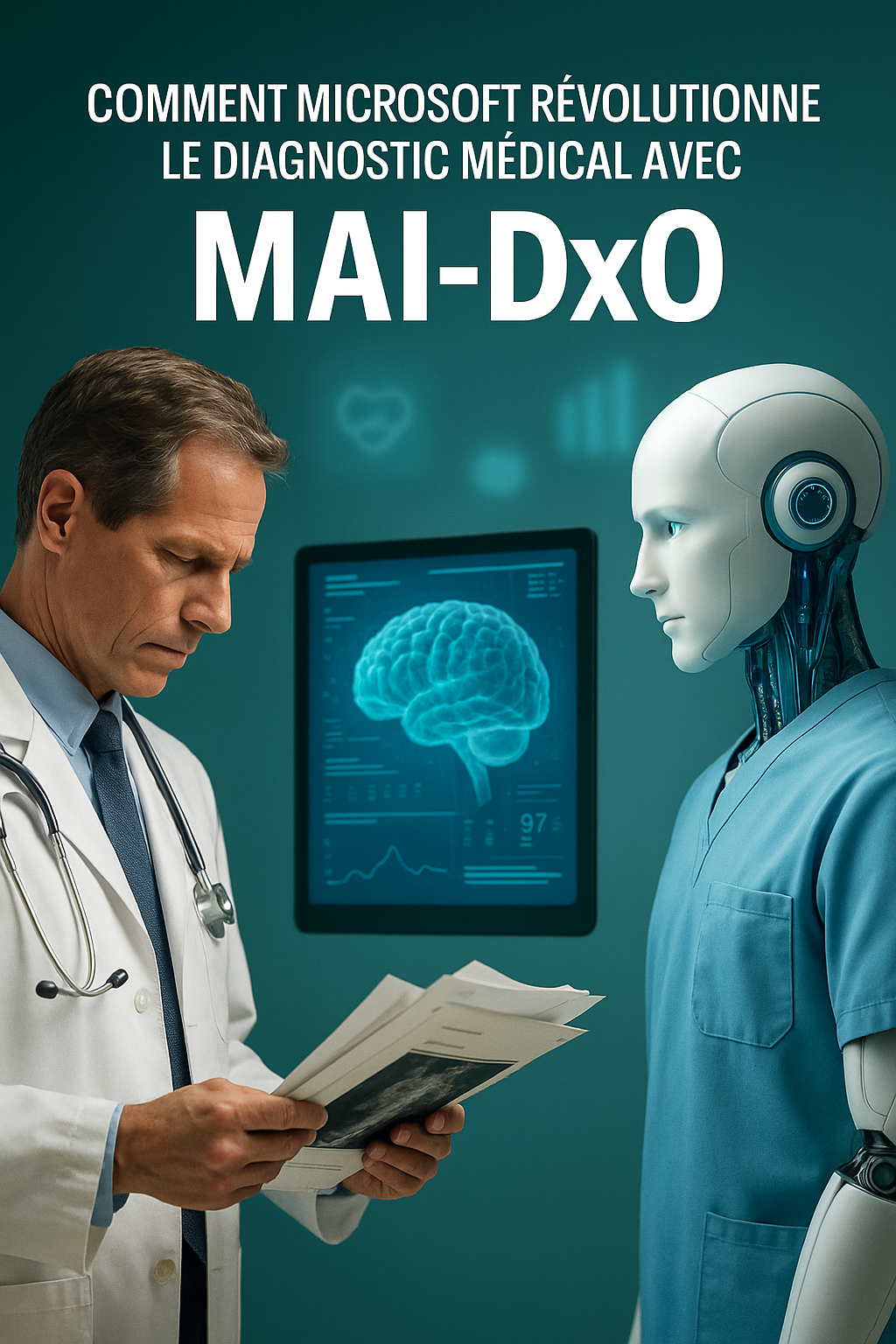
Revolutionizing Healthcare: How AI is Transforming the Future of Medical Care
AI is transforming healthcare: instant diagnostics, personalized treatments, predictive care... Discover how artificial intelligence is redefining medicine and what it means for patients and professionals.
In a constantly evolving world, artificial intelligence (AI) is positioning itself as a major catalyst for transforming the healthcare sector. Imagine a future where accurate diagnoses are established in the blink of an eye, where personalized treatments become the norm, and where preventive care is enhanced through advanced data analysis. This revolution is no longer a distant dream, but a reality taking hold today. AI-driven innovations are not only changing how healthcare professionals approach diseases, but they are also redefining the patient experience. In this article, we will explore how AI is revolutionizing medical care by making treatments more effective, improving access to care, and paving the way for a new era of intelligent health. Get ready to discover the advancements shaping the future of medical care!
Technological Advancements of AI in Medicine
The spectacular progress of artificial intelligence (AI) has led to remarkable innovations in the medical field. The integration of advanced machine learning techniques and neural networks now allows AI systems to process massive volumes of medical data with unprecedented accuracy. This includes the analysis of medical images, where algorithms can detect subtle anomalies undetectable by the human eye, and the discovery of new drugs through advanced computer simulations. Furthermore, AI-powered virtual assistants can offer basic medical advice, freeing up doctors to focus on more complex cases.
One of the most beneficial areas of these advancements is radiology. AI systems can analyze radiological images in seconds, identifying early signs of diseases like cancer with accuracy that rivals that of human radiologists. These systems continuously improve through supervised learning, where they train on millions of annotated images to refine their diagnostic capabilities. This speed and precision have the potential to transform screening and diagnosis, allowing for earlier interventions and, consequently, better disease management.
In biotechnology, AI plays a key role in the search for new treatments. Through computer modeling and genomic data analysis, researchers can identify potential therapeutic targets much faster than before. Deep learning algorithms can also predict how molecules will interact with biological targets, thereby reducing the time and costs associated with developing new drugs. These technologies pave the way for innovative therapies, offering hope for diseases previously difficult to treat.
The Impact of AI on Medical Diagnosis
Medical diagnosis is one of the areas where AI has the greatest impact. AI systems can analyze complex clinical data to provide rapid and accurate diagnoses. For example, in cardiology, algorithms can interpret electrocardiograms (ECGs) with accuracy similar to that of human cardiologists, detecting subtle anomalies that might be missed during manual analysis. This ability to quickly and accurately process vast amounts of clinical data helps reduce diagnostic errors and improve patient outcomes.
Moreover, AI-based diagnostic tools can integrate data from various sources, such as patient medical history, laboratory results, and medical images. This multidimensional integration provides a holistic view of the patient's health, facilitating early disease identification. For instance, in breast cancer screening, AI systems can analyze mammograms to detect signs of cancer long before symptoms become apparent, thereby increasing the chances of successful treatment.
In primary care, AI-powered virtual assistants can help make initial diagnoses based on symptoms reported by patients. These systems use extensive medical databases to compare patient symptoms with millions of similar cases, providing accurate recommendations to doctors. This not only saves time but also provides valuable diagnostic support, especially in regions where access to specialized healthcare is limited.
AI and Treatment Personalization
One of the most promising aspects of AI in medicine is its ability to personalize treatments based on each patient's individual characteristics. This approach, known as personalized medicine, relies on analyzing genetic data, lifestyle, and medical history to design tailored treatments. AI algorithms can analyze genomic sequences to identify specific mutations responsible for diseases and recommend targeted therapies that maximize efficacy while minimizing side effects.
In oncology, for example, personalized treatments are revolutionizing cancer care. AI systems can analyze tumor genetic profiles to identify mutations leading to tumor growth and recommend specific targeted therapies. This approach not only treats cancer more effectively but also reduces side effects by avoiding unnecessary treatments. Furthermore, AI tools can monitor patient response to treatments and adjust protocols in real-time, optimizing clinical outcomes.
Treatment personalization goes beyond genetics. AI systems can also consider patient preferences, lifestyle, and comorbidities to design holistic treatment plans. For example, in the treatment of chronic diseases like diabetes, AI systems can analyze continuous glucose monitoring data to recommend personalized adjustments to diet, exercise, and medication. This approach allows for more proactive and effective management of chronic diseases, improving patients' quality of life.
Automation of Administrative Processes in Healthcare
AI is not only transforming the clinical aspects of medicine but also playing a crucial role in automating administrative processes in healthcare. Administrative tasks, such as medical record management, appointment scheduling, and billing, can be extremely time-consuming for medical staff. Automating these processes frees up time for healthcare professionals, allowing them to focus on patient care and improving the overall efficiency of healthcare facilities.
AI systems can automate the management of electronic medical records (EMRs), ensuring real-time updates and easy accessibility of crucial information. This includes automatic data entry, verification of information accuracy, and management of access permissions. Moreover, AI can help detect errors and inconsistencies in medical records, thereby reducing the risk of medical errors and improving patient safety.
Appointment scheduling is another area where AI can make a significant difference. Intelligent systems can analyze attendance patterns and patient preferences to optimize consultation schedules. This reduces waiting times, improves consultation efficiency, and increases patient satisfaction. Additionally, AI-powered chatbots can handle appointment requests, answer common questions, and send automatic reminders, thereby improving communication between patients and healthcare providers.
Ethical Challenges of AI in Medical Care
Despite the many benefits of AI in medicine, its adoption raises important ethical questions. One of the main challenges is the confidentiality of medical data. AI systems require access to vast amounts of data to function effectively, which poses risks to privacy protection. Ensuring data security and protecting sensitive patient information is crucial to maintaining public trust in these technologies.
Another ethical challenge concerns the transparency and explainability of decisions made by AI. Deep learning algorithms, in particular, are often considered "black boxes" due to their complexity. This can make it difficult to understand how a medical decision was made, which is problematic in contexts where justification of decisions is essential. Healthcare professionals and patients must be able to trust AI recommendations and understand the basis on which they are made.
Finally, there are concerns about algorithmic bias. AI systems are trained on historical data, which may contain implicit biases. If these biases are not properly addressed, they can be perpetuated and amplified by algorithms, leading to inequalities in healthcare. It is essential to develop methods to identify and correct these biases to ensure that AI technologies benefit all patients equitably.
Case Studies: AI Success in Hospitals

AI has already demonstrated its potential in various hospitals worldwide, improving clinical outcomes and operational efficiency. For example, Mount Sinai Hospital in New York uses an AI system called "Deep Patient" to predict the risks of chronic diseases. By analyzing the electronic medical records of thousands of patients, Deep Patient can identify those at risk of developing conditions like diabetes or heart failure, allowing for early and personalized interventions.
In France, the Hôpital Européen Georges-Pompidou in Paris uses AI algorithms to improve the diagnosis of cardiovascular diseases. AI systems analyze echocardiographic images to detect structural heart abnormalities with remarkable accuracy. This technology has reduced diagnosis times and improved accuracy, leading to better outcomes for patients with heart conditions.
In China, Beijing Hospital has integrated AI into its intensive care units to monitor the condition of critically ill patients in real-time. AI systems analyze data from patient monitors, detecting early signs of deterioration and alerting medical staff. This proactive monitoring has helped reduce mortality rates and improve intensive care management.
The Future of AI and Healthcare: Trends to Watch
The future of AI in healthcare looks promising, with several key trends to watch. First, the integration of AI with precision medicine will continue to grow. Advances in genome sequencing and omics data analysis will enable AI systems to provide increasingly personalized therapeutic recommendations, optimizing treatments for each individual.
Next, telemedicine and remote care will see increased adoption of AI. Medical chatbots, remote diagnostic systems, and home patient monitoring platforms will become increasingly sophisticated, improving access to care, especially in remote areas. These technologies will also enable continuous and proactive patient monitoring, facilitating the management of chronic diseases and the prevention of complications.
Finally, innovations in medical robotics will continue to develop. AI-powered surgical robots will become more precise and autonomous, reducing surgical risks and improving surgical outcomes. In addition, care assistance robots, capable of performing daily care tasks, will help fill the shortage of care staff, particularly in long-term care facilities.
How Healthcare Professionals Can Adapt to AI
To fully leverage the benefits of AI, healthcare professionals must adapt to these new technologies. Education and continuous training are essential to enable doctors and nurses to effectively understand and use AI tools. Medical training programs should include courses on the basics of AI, data analysis, and the use of digital health technologies.
Healthcare professionals must also develop interdisciplinary collaboration skills. Working closely with AI experts, engineers, and data scientists is crucial to effectively integrate these technologies into clinical practice. This collaboration ensures that AI tools are designed and used in a way that meets real clinical needs and improves patient care.
Finally, it is important to stay up-to-date with the latest technological advancements and best practices. Participation in conferences, workshops, and professional networks specializing in AI in healthcare can help healthcare professionals stay informed about new trends and innovations. By adopting a proactive attitude and embracing the possibilities offered by AI, healthcare professionals can contribute to shaping the future of medical care.
Conclusion: Towards a New Era of Medical Care Thanks to AI
Artificial intelligence is redefining medical care, making diagnoses more accurate, treatments more personalized, and administrative processes more efficient. While ethical and technological challenges remain, the potential benefits of AI for improving healthcare are immense. By continuing to innovate and adapt, the medical sector can enter a new era where intelligent health becomes the norm, offering higher quality care to all patients.
Advances in AI open exciting prospects for the future, with technologies that promise to make healthcare more accessible, more effective, and more personalized. Healthcare professionals, researchers, and engineers must work together to overcome challenges and maximize the benefits of these innovations. By embracing AI, we can transform the way we approach health and well-being, ushering in a new era of intelligent and patient-centered medical care.
AI is more than just a technology; it represents a revolution in how we conceive and deliver healthcare. By leveraging the power of AI, we have the opportunity to significantly improve patients' quality of life, reduce healthcare costs, and create a more equitable and efficient care system. The future of medical care is promising, and AI is at the heart of this exciting transformation.
👉 To learn more, join our webinar dedicated to AI in healthcare, where we will concretely explore the challenges, use cases, and innovations that are redefining medical practice: Register here.